Be yourself; Everyone else is already taken.
— Oscar Wilde.
This is the first post on my new blog. I’m just getting this new blog going, so stay tuned for more. Subscribe below to get notified when I post new updates.
Be yourself; Everyone else is already taken.
— Oscar Wilde.
This is the first post on my new blog. I’m just getting this new blog going, so stay tuned for more. Subscribe below to get notified when I post new updates.
Space can be a wondrous place, and we’ve got the pictures to prove it! Take a look at our favorite pictures from space here, and if you’re wondering what happened today in space history don’t miss our awesome On This Day in Space video show here!
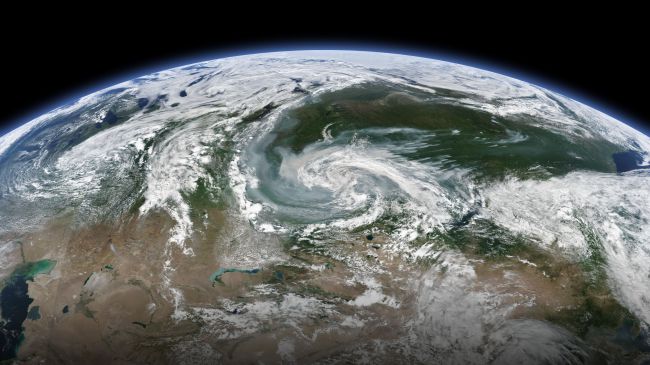
Tuesday, July 23, 2019: Plumes of smoke from wildfires mix with a swirling storm system over Russia in this view from NASA’s Earth Observatory. The natural-color image was created using data collected from the Visible Infrared Imaging Radiometer Suite (VIIRS) instrument on the Suomi NPP satellite on Monday (July 21). In the regions of Irkutsk, Krasnoyarsk and Buryatia, the largest wildfires had burned more than 500 square miles (1,300 square kilometers) by Tuesday, according to NASA. — Hanneke Weitering
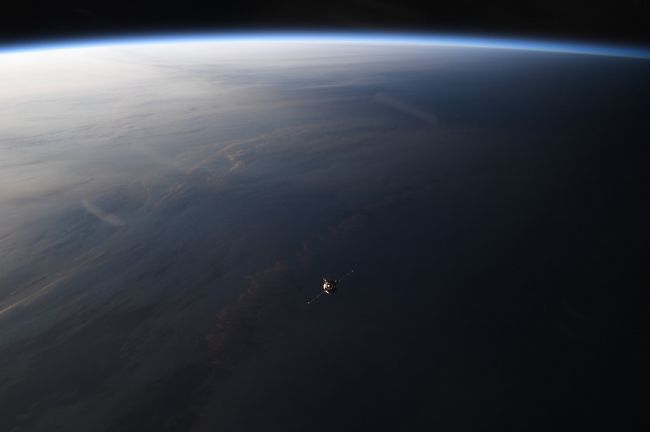
Monday, July 22, 2019: The Soyuz MS-13 spacecraft approaches the International Space Station carrying three new Expedition 60 crewmembers. NASA astronaut Drew Morgan, European Space Agency astronaut Luca Parmitano and Russian cosmonaut Aleksandr Skvortsov lifted off from the Baikonur Cosmodrome in Kazakhstan Saturday (July 20), on the 50th anniversary of the Apollo 11 moon landing, and arrived at the orbiting laboratory about six hours later. — Hanneke Weitering
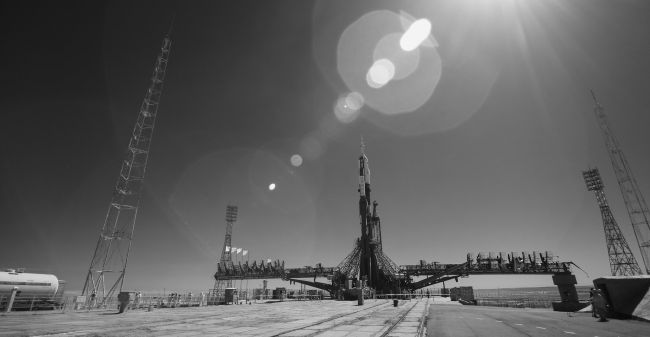
Friday, July 19, 2019: A Soyuz rocket that will launch three people to the International Space Station on the 50th anniversary of the Apollo 11 moon landing tomorrow (July 20) stands tall on the launchpad at the Baikonur Cosmodrome in Kazakhstan. NASA astronaut Andrew Morgan, Italian astronaut Luca Parmitano of the European Space Agency and Russian cosmonaut Aleksandr Skvortsov will lift off at 12:28 p.m. EDT (1628 GMT), kicking off a six-month mission as crewmembers of Expeditions 60 and 61. — Hanneke Weitering
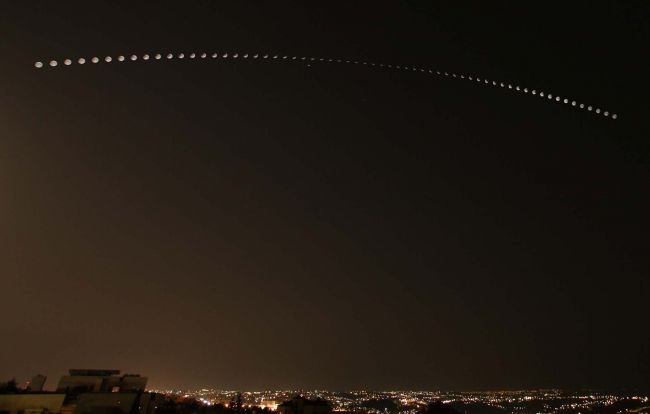
Thursday, July 18, 2019: The full moon of July, also known as the Thunder Moon, passed through Earth’s shadow Tuesday night into Wednesday morning (July 16-17). Astrophotographer Zaid Abbadi captured the partial lunar eclipse from Amman, Jordan, and created this composite image showing the moon’s path across the sky as its surface gradually darkened in the Earth’s shadow. — Hanneke Weitering
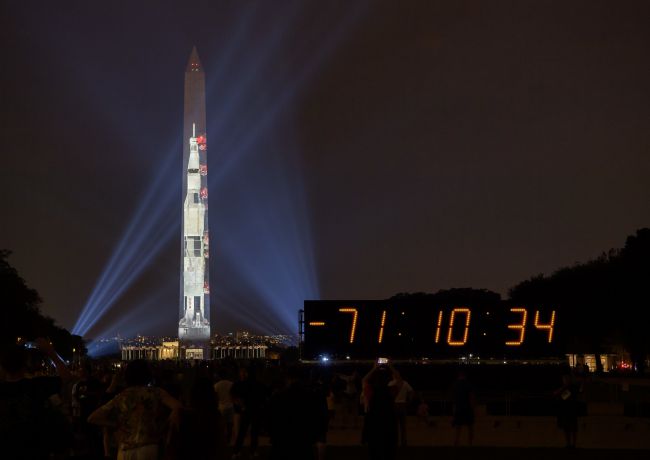
Wednesday, July 17, 2019: A full-size projection of NASA’s Saturn V rocket lit up the Washington Monument in honor of the 50th anniversary of the launch of the Apollo 11 moon mission yesterday (July 16). The Saturn V rocket, which launched the astronauts to the moon, was 363 feet (111 meters) tall, and its projection spans about two-thirds of the height of the 555-foot (169 m) Washington Monument. — Hanneke Weitering
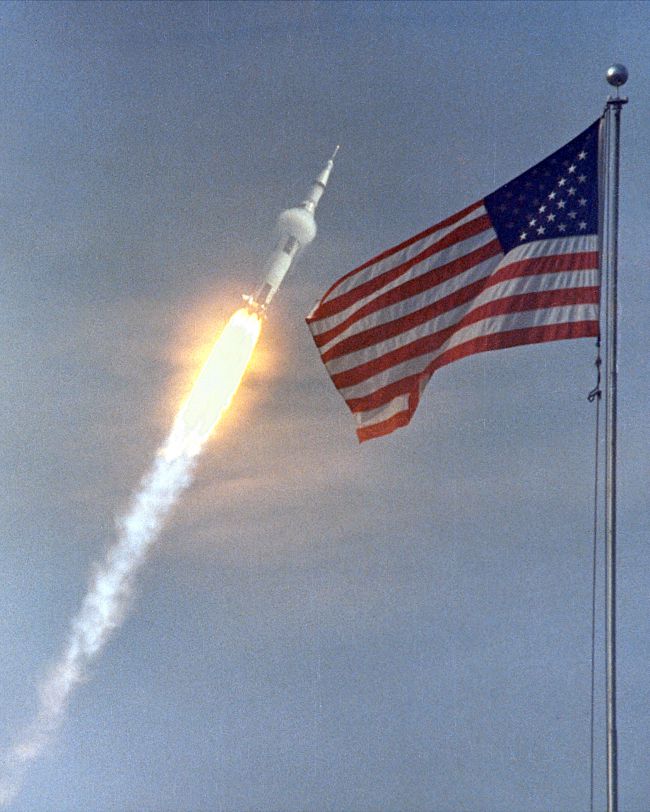
Tuesday, July 16, 2019: The Saturn V rocket carrying three Apollo 11 astronauts to the moon soars behind an American flag shortly after lifting off from Kennedy Space Center in Florida. As the rocket broke the sound barrier, a ring of vapor formed around the rocket’s second stage. Today is the 50th anniversary of the launch of the Apollo 11 mission, which landed the first astronauts on the moon on July 20, 1969. — Hanneke Weitering
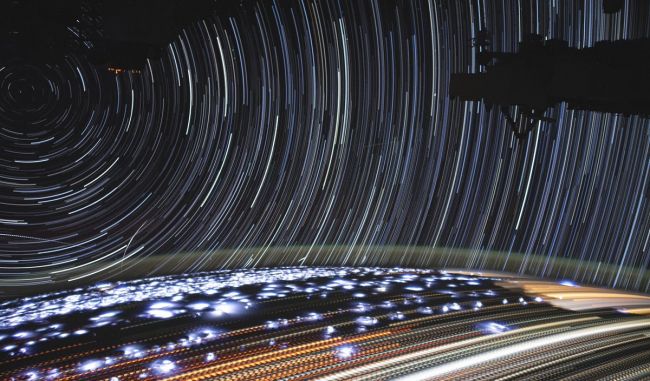
Friday, July 12, 2019: A long-exposure photo of lightning storms seen from space makes Earth look like it’s scattered with fluffy bits of dryer lint. Meanwhile, Earth’s city lights streak across the land below, an effect caused by both the Earth’s rotation and the swift orbit of the International Space Station, where NASA astronaut Christina Koch captured this image. In the background, star trails circle around Polaris, the North Star. — Hanneke Weitering

Thursday, July 11, 2019: The Close-Up Imager (CLUPI) camera set to launch on the European Space Agency’s ExoMars rover in 2020 gets ready for its Mars mission by studying a Martian meteorite on Earth. Named “Exhibit 0102.226,” the meteorite was discovered in Oman in 2001. Scientists at ESA’s ESTEC technology center in the Netherlands loaned the space rock from the Natural History Museum in Bern, Switzerland, to calibrate the instrument before it goes to the Red Planet. — Hanneke Weitering
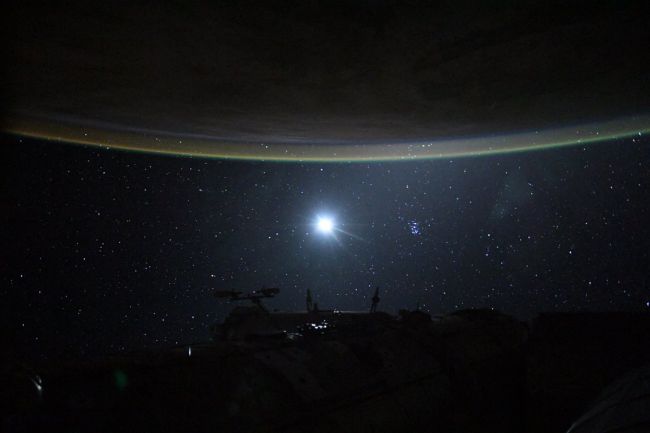
Tuesday, July 10, 2019: The moon lights up the star-filled night sky as an effect called “airglow” gives Earth’s atmosphere a subtle green glow in this photo taken by an astronaut at the International Space Station. This green luminescence is the result of interactions between atmospheric particles and ultraviolet radiation coming from the sun. — Hanneke Weitering
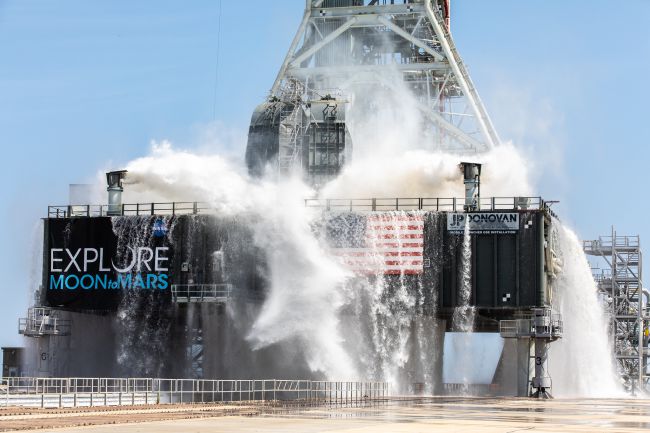
Tuesday, July 9, 2019: An enormous burst of water gushes over Pad 39B at NASA’s Kennedy Space Center in Florida during a water flow test at its new mobile launcher. The launch tower will support the upcoming flights of NASA’s new Space Launch System megarocket for the first Artemis moon mission. About 400,000 gallons of water poured onto the mobile launcher during this test, which took place on July 2. — Hanneke Weitering
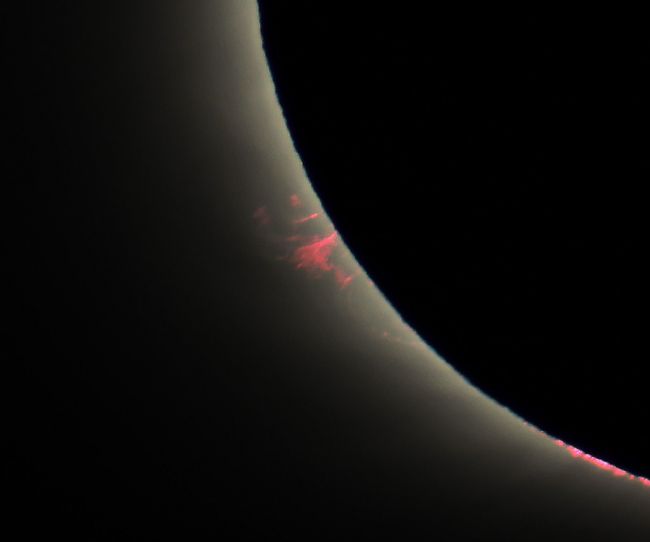
Monday, July 8, 2019: During the total solar eclipse last Tuesday (July 2), bright-pink solar prominences became visible around the sun’s atmosphere as the moon blocked its bright surface from view. These prominences are made of tangled magnetic field lines that hold on to plasma in the sun’s chromosphere, and the features can extend all the way out into the sun’s corona. Prominences are only visible during a total solar eclipse, when the brightest part of the sun is blocked from view by Earth’s moon. — Hanneke Weitering
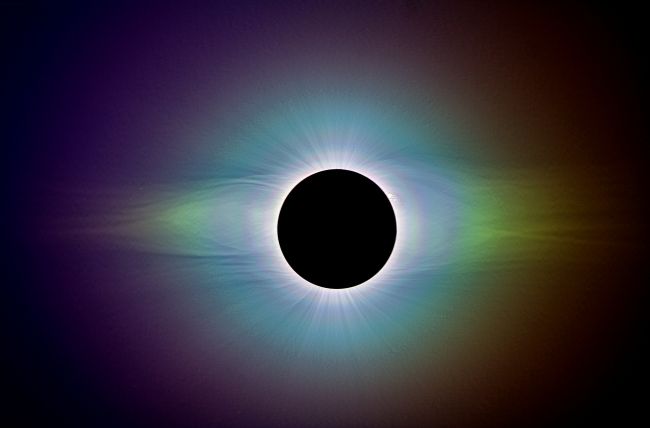
Friday, July 5, 2019: Details of the sun’s brilliant corona come to light during the total solar eclipse of July 2 in this composite of polarized images captured from the European Southern Observatory’s La Silla Observatory in Chile. The sun’s corona, which is only visible during totality, can reveal information about magnetic activity on the surface of the sun. — Hanneke Weitering
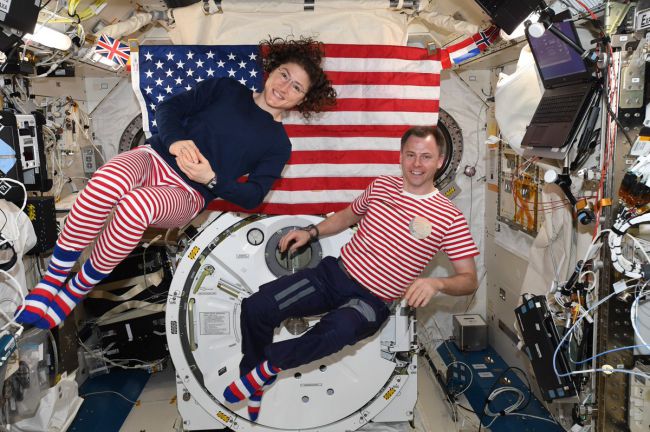
Thursday, July 4, 2019: Two NASA astronauts beamed home their holiday wishes from the International Space Station today (July 4). Christina Koch and Nick Hague are the only two Americans currently living off the planet. — Hanneke Weitering
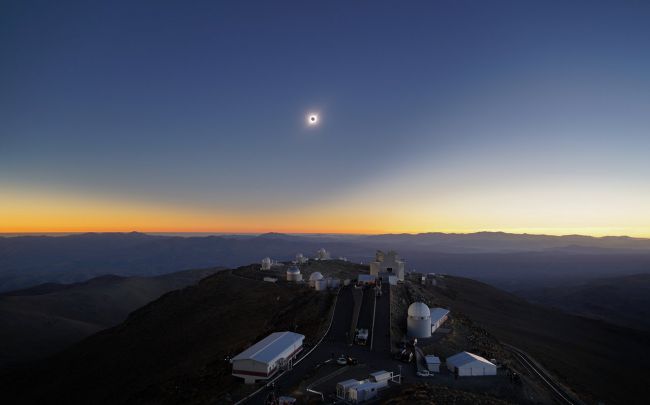
Wednesday, July 3, 2019: A total solar eclipse darkens the sky above the La Silla Observatory in Chile in this aerial shot captured via drone during totality. Thousands of spectators had gathered at the observatory to see the eclipse. In the foreground are several of the telescopes that belong to the observatory, while the Andes Mountains provide a breathtaking backdrop. — Hanneke Weitering
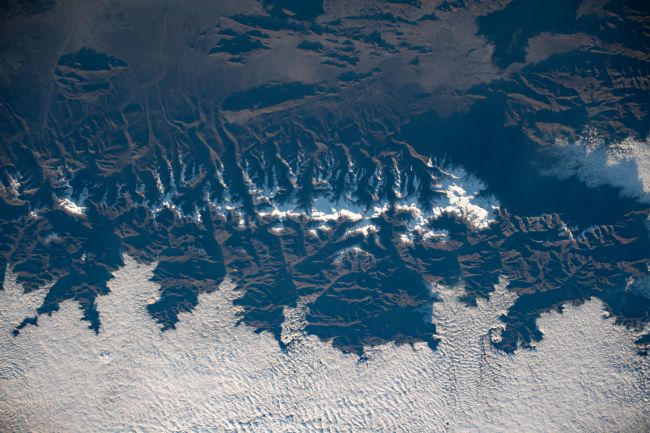
Monday, July 1, 2019: A photo of Earth taken from the International Space Station reveals the frigid mountain tops of the Andes in South America. Tomorrow (July 2), a total solar eclipse will pass over this mountain range. Parts of Chile and Argentina will get to witness totality, when the moon blocks out the sun entirely, while the rest of South America can see a partial eclipse. — Hanneke Weitering
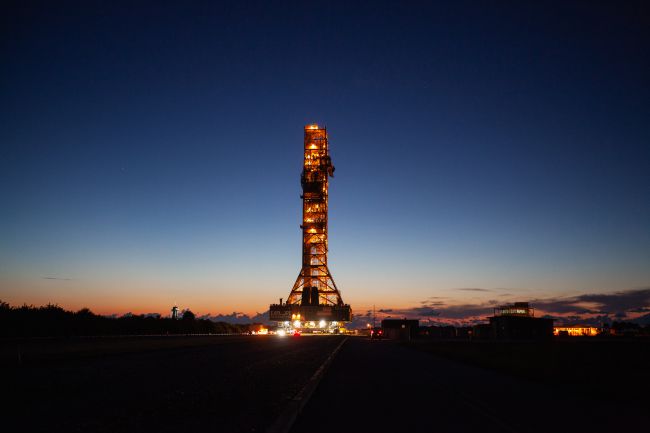
Friday, June 28, 2019: NASA’s mobile launcher arrives at NASA’s Launch Complex 39B at the Kennedy Space Center in Florida for final tests in preparation for its launch of the Space Launch System (SLS) megarocket and Orion spacecraft. The mobile launcher will be used for the launch of Artemis 1, the first planned mission of NASA’s new moon exploration program. It arrived at the pad on June 27 and will remain there for the rest of the summer as NASA gears up for the historic uncrewed test flight around the moon. — Hanneke Weitering
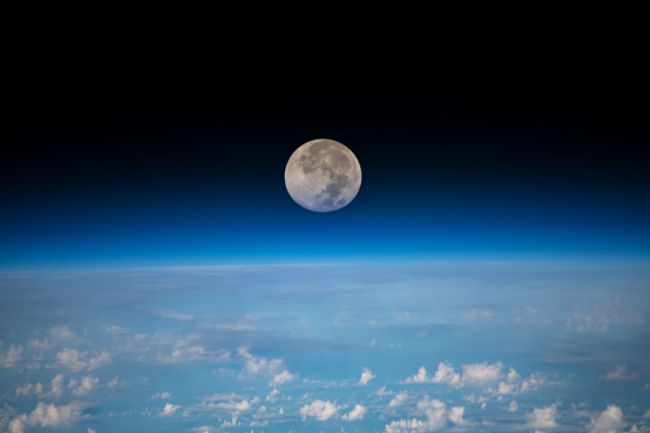
Thursday, June 27, 2019: The full moon of June, also known as the Strawberry Moon, looms above Earth’s horizon in this photo taken by an astronaut at the International Space Station. The image was captured on June 17 as the space station was orbiting 254 miles (409 kilometers) above the Pacific Ocean northeast of Guam. — Hanneke Weitering
Monday, July 1, 2019: A photo of Earth taken from the International Space Station reveals the frigid mountain tops of the Andes in South America. Tomorrow (July 2), a Total solar eclipse will pass over this mountain range. Parts of Chile and Argentina will get to witness totality, when the moon blocks out the sun entirely, while the rest of South America can see a partial eclipse. — Hanneke Weitering
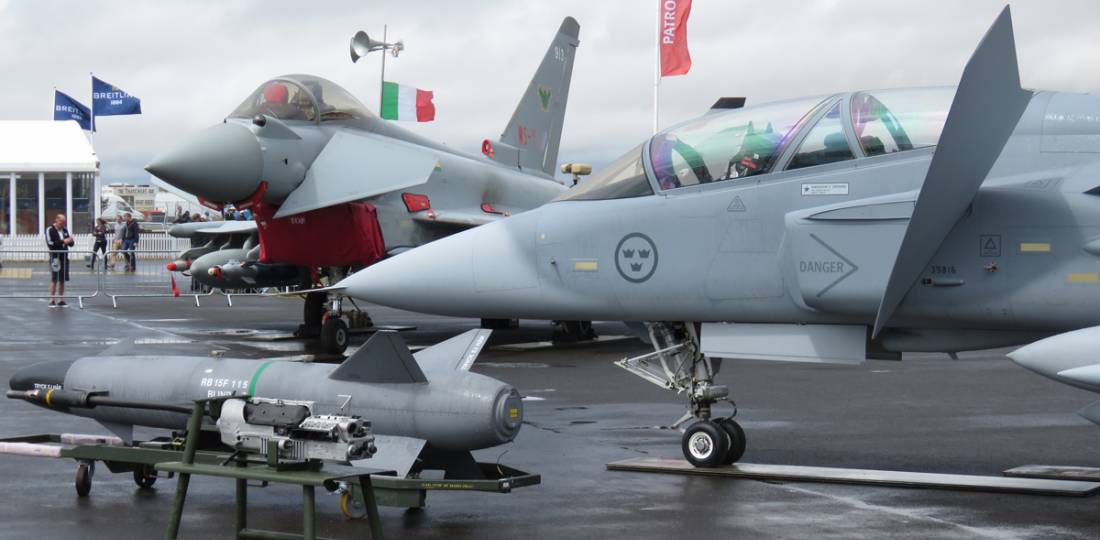
On July 18, Britain and Sweden signed a Memorandum of Understanding to partner on “future combat air.” The agreement was inked by Britain’s Defence Secretary, Penny Mordaunt, and her Swedish counterpart, Peter Hultqvist, before an announcement ceremony at the Royal International Air Tattoo at Fairford the following day.
During this event, news of the agreement was greeted warmly by Hultqvist, the British Minister of Defence Procurement Stuart Andrew, UK Chief of the Air Staff Air Marshal Sir Stephen Hillier, Swedish Air Force Chief Major General Mats Helgesson, CEO of BAE Systems Charles Woodburn, and chairman of Saab AB Marcus Wallenberg.
The landmark agreement is an overarching arrangement that commits both governments to work on a joint combat air development and acquisition program. This will provide for the development of new concepts to meet both nations’ future requirements. It will include a joint acquisition roadmap that identifies advanced technologies that can be inserted into Gripen and Typhoon before employing them in a future combat air system, as well as technologies from Gripen E and Typhoon that could be “spiraled” onto a Future Combat Air System.
The agreement outlined the initial principles for an Anglo-Swedish acquisition program and allows for additional activities to be taken forward, including contracts. The agreement will not see Sweden join Britain’s Team Tempest, at least for now.
Team Tempest is a co-funded partnership between the RAF’s Rapid Capabilities Office and UK Industry (BAE Systems, Leonardo UK, MBDA UK, and Rolls-Royce) responsible for a Future Combat Air System feasibility study and technology demonstration program, including operational analysis and an analysis of alternatives. Sweden has not (so far) joined the UK’s Combat Air Acquisition Programme (led by the UK MOD), which is tasked with delivering the acquisition program that will eventually replace the RAF’s Eurofighter Typhoons, and whose work is informed by Team Tempest.
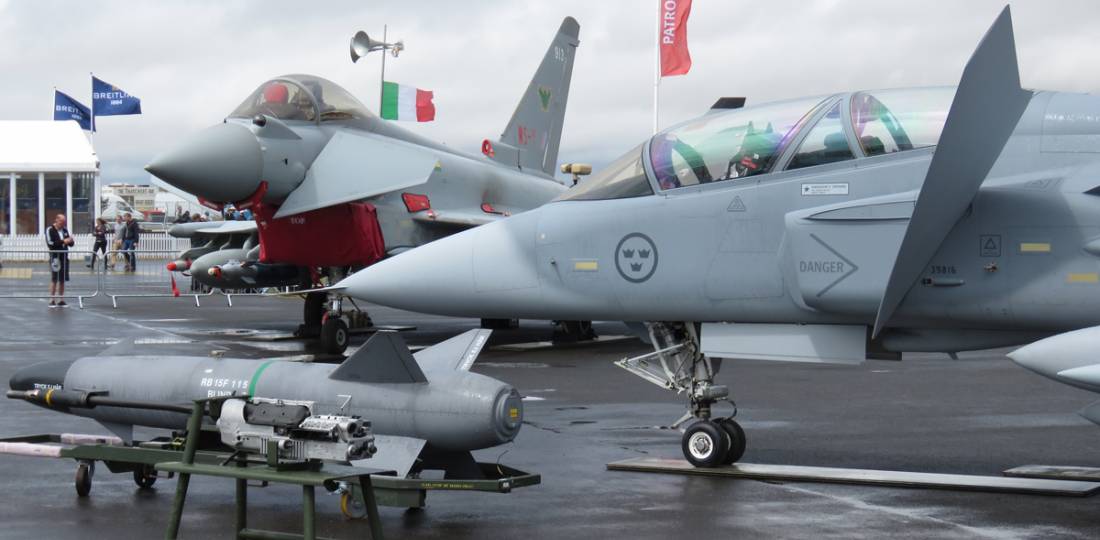
The new Anglo-Swedish partnership will initially take the form of a wider study that may or may not lead to the development of an Anglo-Swedish future combat aircraft—or that may or may not see Sweden formally join the Tempest program. For the time being, Sweden will work with Team Tempest in a new partnership, with the two nations pooling their expertise.
The Anglo-Swedish agreement has been predicted for some time, and a joint feasibility report was completed by the two governments in April 2019, following a joint report by British and Swedish Industry. The report’s findings were accepted by ministers in May.
Both Britain and Sweden are determined to remain at the forefront of combat air and have similar future combat air requirements, including any new system being optimized for air defense. The developing threat environment means that, in future, Sweden could require a heavier, more capable combat aircraft than Gripen, as well as “additive capabilities” such as unmanned “loyal wingmen,” which are also being studied under the auspices of Tempest.
More nations may join the UK/Swedish effort if they have similar requirements.
India has successfully launched its second lunar mission a week after it halted the scheduled blast-off due to a technical snag.
Chandrayaan-2 was launched at 14:43 local time (09:13 GMT)
India’s space chief said his agency had “bounced back with flying colours” after the aborted first attempt.
India hopes the $145m (£116m) mission will be the first to land on the Moon’s south pole.
The spacecraft has entered the Earth’s orbit, where it will stay for 23 days before it begins a series of manoeuvres that will take it into lunar orbit.
If successful, India will become the fourth country to make a soft landing on the Moon’s surface. Only the former Soviet Union, the US and China have been able to do so.
The lift-off was broadcast live on TV and the space agency’s official social media accounts.
There was applause in the Indian Space Research Organisation (Isro) control room minutes after the launch, as the rocket took off towards the outer atmosphere.
For the first time in India’s space history, an interplanetary expedition is being led by two women – Muthaya Vanitha, the project director, and Ritu Karidhal, the mission director.

It is the most complex mission ever attempted by India’s space agency.
“It is the beginning of a historical journey of India towards the moon,” said Isro chief K Sivan in a speech after the launch.
He thanked and congratulated the nearly 1,000 scientists, engineers and other staff who had worked on the mission: “It is my duty to salute all the people who have done the work.”
Prime Minister Narendra Modi praised the mission for being “fully indigenous”.
The countdown on 15 July was stopped 56 minutes before launch after a “technical snag was observed in [the] launch vehicle system”, according to Isro. Indian media have reported that a leak from a helium gas bottle in the cryogenic engine of the rocket was to blame.
The fuel from the rocket was drained and the scientists resolved the glitch.
India’s first lunar mission in 2008 – Chandrayaan-1 – did not land on the lunar surface, but it carried out the first and most detailed search for water on the Moon using radars.
Chandrayaan-2 (Moon vehicle 2) will try to land near the little-explored south pole of the Moon.
The mission will focus on the lunar surface, searching for water and minerals and measuring moonquakes, among other things.
India is using its most powerful rocket, the Geosynchronous Satellite Launch Vehicle Mark III (GSLV Mk-III), in this mission. It weighs 640 tonnes (almost 1.5 times the weight of a fully-loaded 747 jumbo jet) and, at 44 metres (144ft), is as high as a 14-storey building.
By Adam Vaughan
The UK gave £4.6bn to overseas fossil fuel projects between 2010 and 2017, which campaigners say is incompatible with the country’s climate and development goals.
More than half of the support for energy projects abroad – provided in the form of overseas aid and lines of credit via the UK’s credit export agency – went on fossil fuels during the period. By comparison, just 17 per cent was spent on renewables, found an analysis by Catholic charity CAFOD and thinktank ODI.
“It’s a bit of a no-brainer if we want to get to net zero and keep below 1.5°C, we shouldn’t be using public money for fossil fuels,” says Sarah Wykes of CAFOD.
Despite the UK agreeing to the 2015 Paris climate change agreement and committing to the UN’s sustainable development goals in 2016, there is no clear downward trend in the funding. “It’s inconsistent to have fossil fuel funding when you have the climate goals and poverty reduction goals the UK has,” says Wykes.
The top recipient of the support was Brazil with £2.3bn over the period, followed by Ghana and Russia. Former UN secretary general Ban Ki-moon has been calling to an end to the support for years, as have some British politicians. The UK’s Labour party has promised to shift credit export finance priorities away from fossil fuels and towards renewables.
Mary Creagh, Labour MPs and chair of the Environmental Audit Committee, told New Scientist: “When it comes to support for fossil fuel projects, the government’s action is undermining efforts to combat the climate emergency.”
There are signs that attitudes in government are changing. International development secretary Rory Stewart said earlier this month that he felt “very strongly” that his department should not be spending money on fossil fuels. However, it is unlikely Stewart will remain a minister should Boris Johnson be elected Conservative party leader on Tuesday, as is widely predicted.
A government spokesperson said: “As the prime minister announced at the G20 last month, in future we will look for the greenest way to deliver UK aid.”

Our best models of cosmology suggest the universe will either go on forever, implode or rip itself apart. A new proposal suggests an even weirder destinyPHYSICS 17 July 2019

By Anil Ananthaswamy
TRILLIONS of years from now, long after the sun grows to engulf Earth and then shrinks into a dim remnant of its former self, the universe will enter a quiet retirement. Thanks to its continued expansion, clusters of once-neighbouring galaxies will begin zooming away from each other so fast that even light won’t be able to bridge the gap. Stars will burn out and die. Darkness will fall across the cosmos.
At least, that is the most popular scenario. The cold, lonely immortality of this “big freeze” is a direct consequence of the standard model of cosmology, our best description of the universe. It depends on all manner of assumptions, not least that dark energy, the mysterious force thought to be causing the expansion of the cosmos to accelerate, will always have the same unvarying strength.
But some cosmologists think that instead of dark energy remaining forever constant, it might diminish over time, causing the universe to collapse in on itself in a big crunch, a reverse of the big bang. Others think dark energy could be growing in potency, heralding a future where the universe could expand so far so fast that the fabric of space-time starts to tear itself apart. This outcome is called the big rip.
Freeze, crunch or rip? Or none of the above? That fourth possibility is the startling conclusion of the latest attempt to divine the fate of the universe. By invoking other mysterious spectres that haunt the cosmos besides dark energy, it suggests a far weirder turn of events: …
This is an example post, originally published as part of Blogging University. Enroll in one of our ten programs, and start your blog right.
You’re going to publish a post today. Don’t worry about how your blog looks. Don’t worry if you haven’t given it a name yet, or you’re feeling overwhelmed. Just click the “New Post” button, and tell us why you’re here.
Why do this?
The post can be short or long, a personal intro to your life or a bloggy mission statement, a manifesto for the future or a simple outline of your the types of things you hope to publish.
To help you get started, here are a few questions:
You’re not locked into any of this; one of the wonderful things about blogs is how they constantly evolve as we learn, grow, and interact with one another — but it’s good to know where and why you started, and articulating your goals may just give you a few other post ideas.
Can’t think how to get started? Just write the first thing that pops into your head. Anne Lamott, author of a book on writing we love, says that you need to give yourself permission to write a “crappy first draft”. Anne makes a great point — just start writing, and worry about editing it later.
When you’re ready to publish, give your post three to five tags that describe your blog’s focus — writing, photography, fiction, parenting, food, cars, movies, sports, whatever. These tags will help others who care about your topics find you in the Reader. Make sure one of the tags is “zerotohero,” so other new bloggers can find you, too.

 Technology
You must be logged in to post a comment.